Quilting
Work out the quilt before the cut.
Calculate quilt blocks, backing and binding with visible assumptions and arithmetic.
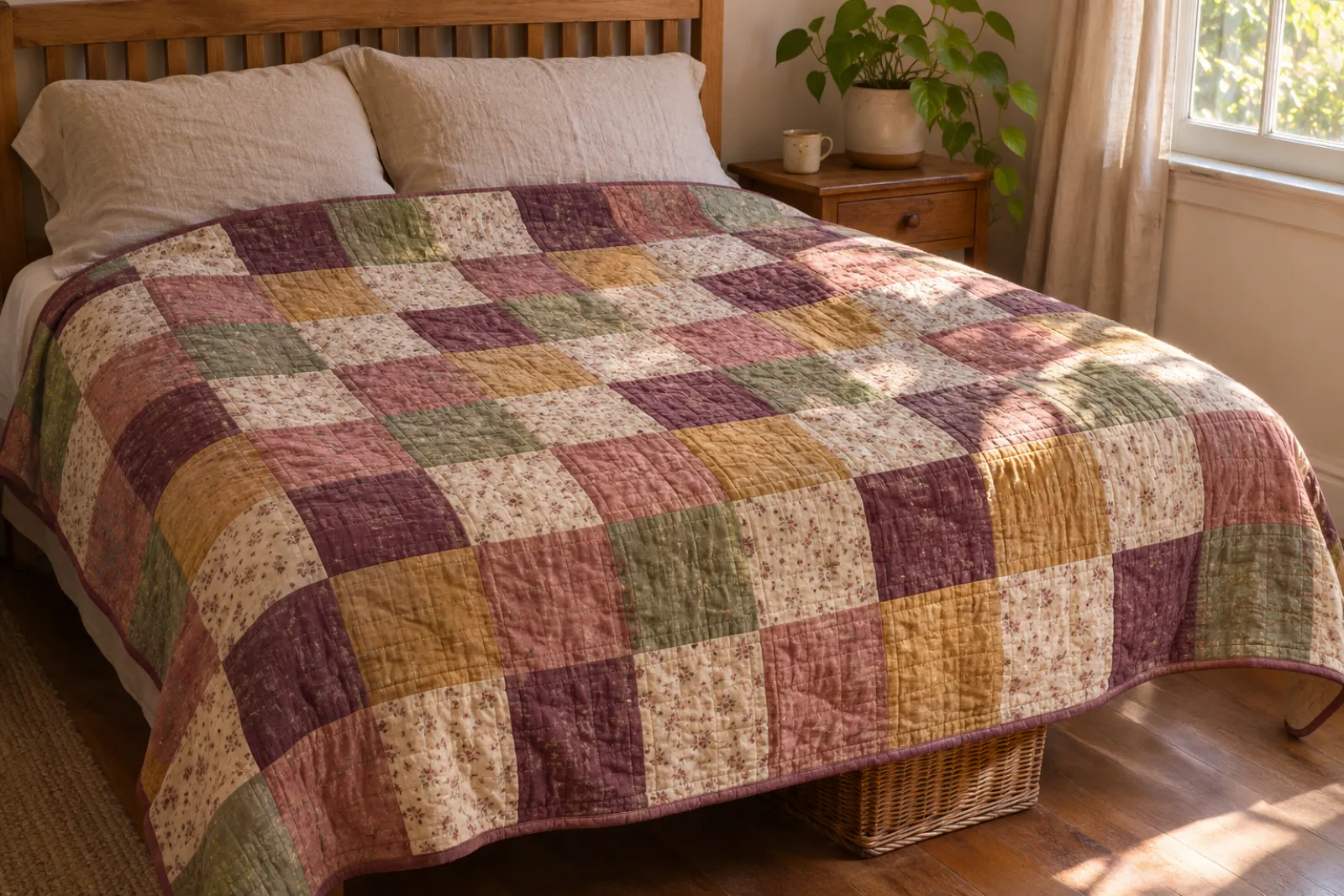
These are SewingCritic planning sizes, not bed-fitting standards. Measure your mattress and desired drop. No borders or sashing are included. Sashing means strips between blocks.
| Project | Top width | Top length |
|---|---|---|
| Baby | 36 | 48 |
| Throw | 60 | 72 |
| Twin | 66 | 90 |
| Queen | 90 | 96 |
| King | 108 | 96 |
What does a throw need?
60 × 72 in target; 5 × 6 blocks at 12 in = 30 blocks. Top: 60 × 72 in. Backing target: 68 × 80 in. With 44 in fabric and 2 in reserved for selvedges, two panels each 80 in long need 160 / 36 = 4.45 yd; round up to 4.5 yd.
Binding: perimeter 264 + 20 in closing allowance = 284 in after joining. Eight 42 in strips minus seven 2.5 in diagonal joins = 318.5 in. Eight strips at 2.5 in wide use 20 / 36 yd; round up to 0.75 yd.
How does the calculator work?
Blocks across = round target width / finished block side upward. Repeat for length. Actual top = whole block count × side; a target can grow. Backing adds 8 in to each actual dimension, then adds 1/2 in allowances to both edges of every joining seam. Panel count grows until sewn width covers backing. Binding uses perimeter + 20 in closing allowance, 2.5 in strips and nominal fabric width minus 2 in. Each diagonal strip join consumes 2.5 in of length; add whole strips until their joined length covers the target. Backing and binding round up to quarter yards. No piecing fabric, batting, prewash shrinkage or directional print matching is included.
Which sources did we use?
- SewingCritic quilt geometry and planning sizesoriginal worked calculation · read 2026-11-04