Learn
Sewing machine needle sizes and types
Match the point to the fabric, then choose the size.
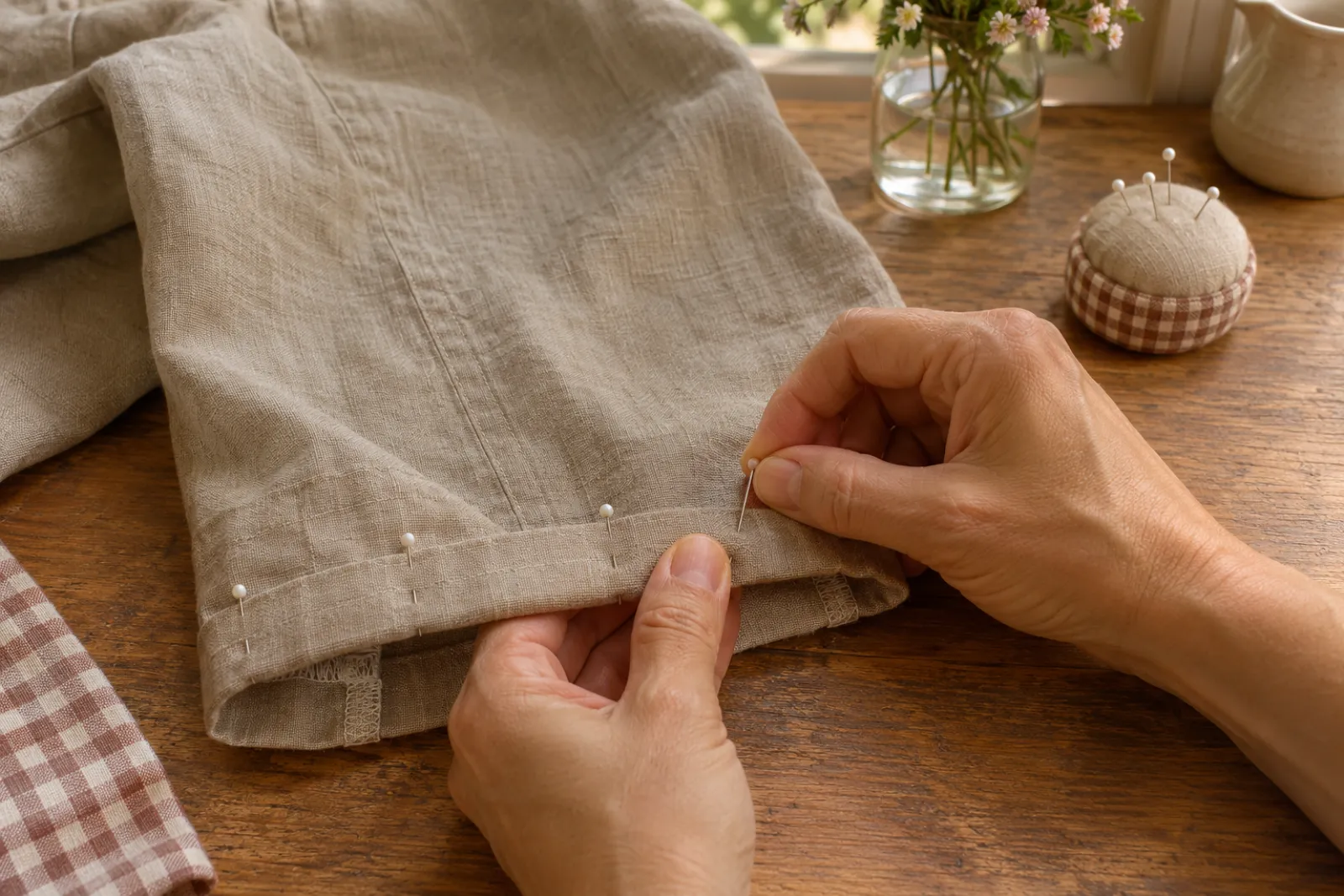
For practice, allow 30–60 minutes (planning estimate). Bring a fabric scrap, suitable needle and matching thread. Use the model manual for machine work.
What do the two needle size numbers mean?
In 80/12, both numbers describe the same needle size. SCHMETZ uses metric size 80 for a 0.80 mm blade diameter; the other system calls that size 12.
The needle system is separate from size. Match the system printed in your machine manual, then choose the point and size for the fabric. A larger size does not make a Universal point interchangeable with a leather cutting point.
Which needle type matches the fabric?
Use a point intended for the material. SCHMETZ lists Universal or Microtex for chiffon, Jersey for jersey, Stretch for Lycra, and Jeans for denim.
The chart below combines the needle maker’s fabric ranges with Brother’s thread and stitch guidance. Where the ranges overlap, we show the narrower range. It is an editorial cross-reference, not a universal setting.
How should I match thread and needle?
Read the thread maker’s needle guidance too. Gütermann Sew-all is polyester No. 100 with a Universal NM 70–90 recommendation; that number is not a conversion to another maker’s thread weight.
Aurifil documents an 80/12 Microtex/Sharp or Universal needle for its 50wt cotton. For quilting cotton piecing, the chooser offers this as a separate project option.
When should I follow a different setting?
Follow the model manual when it limits needle size or thread use. Fabric weight, coatings, stretch and layered seams can change the choice.
Use a scrap of the complete seam before working on the project. For leather or vinyl, identify the material first: our combined row keeps their needle choices separate.
| Fabric | Needle type and size | Thread type and weight | Stitch length |
|---|---|---|---|
| Chiffon | Universal or Microtex 60/8–70/10 | Polyester 60–90 | 1.8–2.5 mm |
| Cotton lawn | Universal 70/10 | Polyester 60–90 | 1.8–2.5 mm |
| Quilting cotton | Universal 80/12–90/14 | Polyester 60–90 or cotton 50–60 | 2.0–3.0 mm |
| Linen | Universal 70/10–90/14 | Polyester 60–90 or cotton 50–60 | 2.0–3.0 mm |
| Jersey knit | Jersey 75/11–80/12 | Polyester 50 | Not published; use the setting for fabric thickness |
| Stretch / Lycra | Stretch 75/11 or 90/14 | Polyester 50 | Not published; use the setting for fabric thickness |
| Denim | Jeans 90/14–100/16 | Polyester 60; 30 for the heavier row | 2.5–4.0 mm |
| Canvas | Jeans 90/14–100/16 | Polyester 60; 30 for the heavier row | 2.5–4.0 mm |
| Leather / vinyl | Thin leather: Leather 70/10–90/14; vinyl: Microtex 60/8–90/14 | Not published for this combined material row | Not published for this combined material row |
| Fleece | Universal 70/10–90/14 or Stretch 75/11–90/14 | Polyester 50 | Not published; use the setting for fabric thickness |
Which sources did we use?
- Schmetz Fabricmaker reference · read 2026-11-04
- Schmetz Primermaker reference · read 2026-11-04
- Brother Chartmaker reference · read 2026-11-04
- Aurifilmaker reference · read 2026-11-04
- Guetermannmaker reference · read 2026-11-04
- SCHMETZ needle sizes and systems FAQmaker reference · read 2026-11-04
What if the practice seam goes wrong?
Stop and check the threading, needle and fabric combination before changing settings. Use the stitch fixer to match the symptom to a first check.
What should you practise next?
Try the scrunchie cutting chart and steps, or keep the beginner PDF pack for later.
Continue to the next lesson ↗