Learn
Five stitches for making and mending.
Learn running, backstitch, slip, blanket and whip stitches with original teaching diagrams.
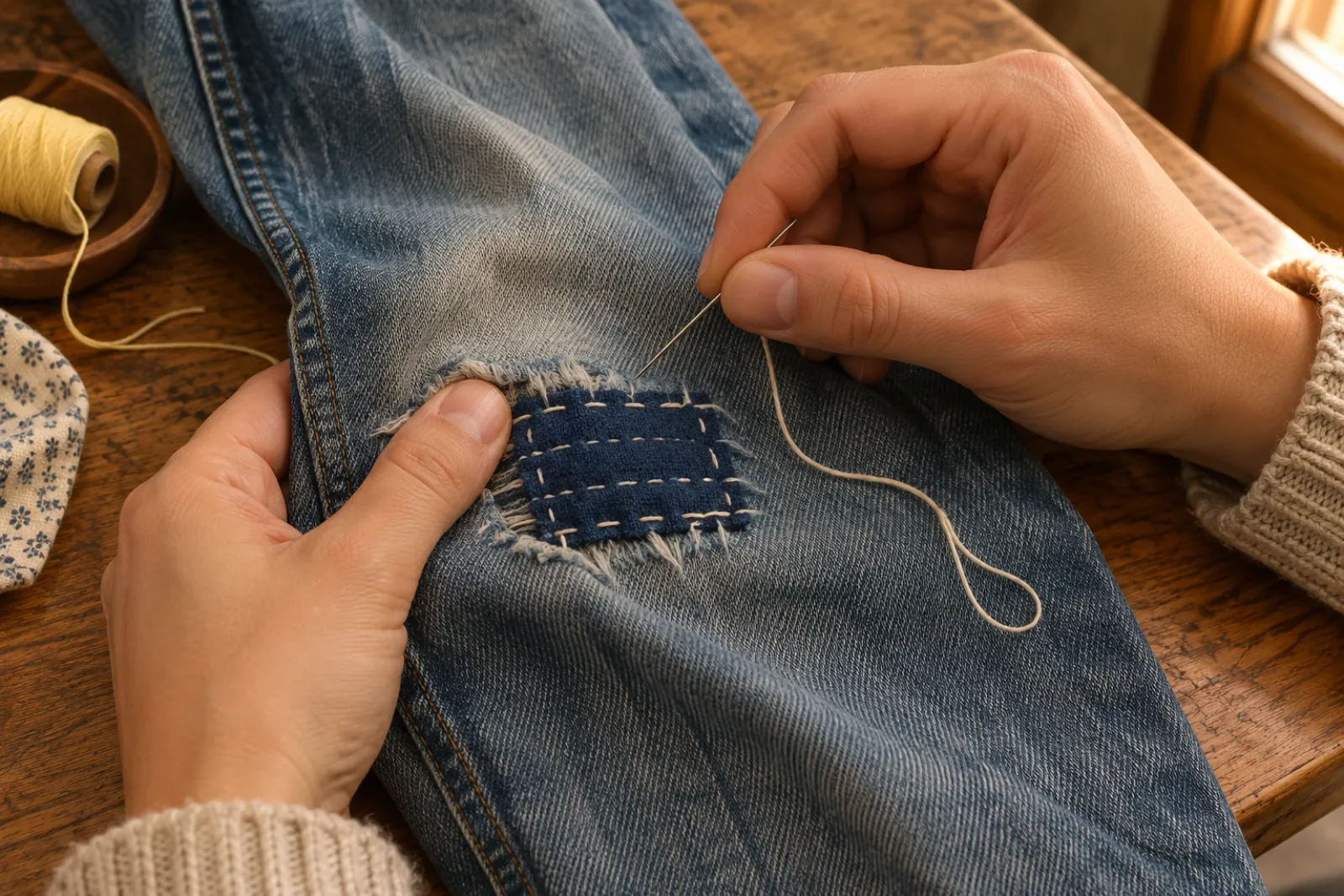
For practice, allow 30–60 minutes (planning estimate). Bring a fabric scrap, suitable needle and matching thread. Use the model manual for machine work.
How do you sew running?
Alternate evenly spaced stitches and gaps.
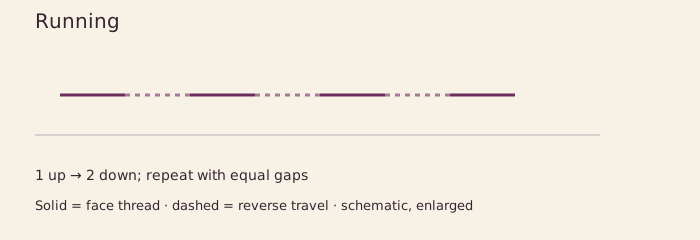
Follow the direction caption in the diagram. Practise on a spare square and keep the fabric flat.
How do you sew backstitch?
Work backward into the end of the last stitch.
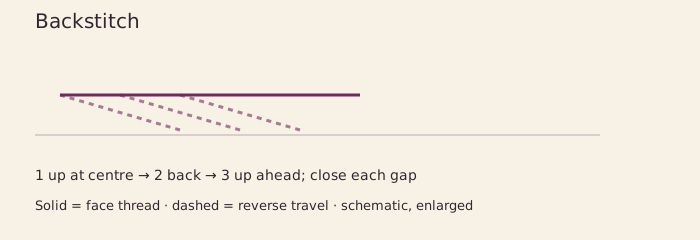
Follow the direction caption in the diagram. Practise on a spare square and keep the fabric flat.
How do you sew slip?
Catch a few cloth threads, then travel inside the fold.
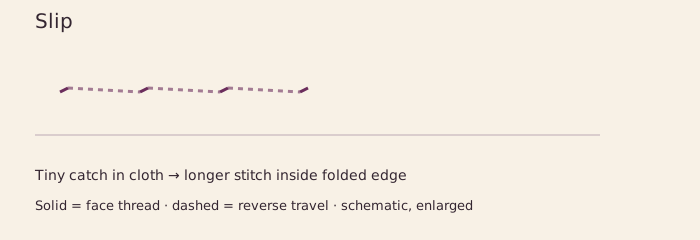
Follow the direction caption in the diagram. Practise on a spare square and keep the fabric flat.
How do you sew blanket?
Keep the loop beneath the needle at the edge.
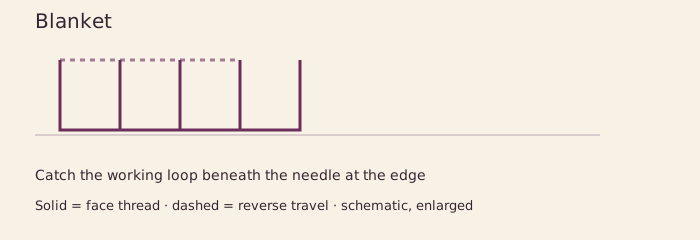
Follow the direction caption in the diagram. Practise on a spare square and keep the fabric flat.
How do you sew whip?
Wrap diagonal stitches around the raw edge.
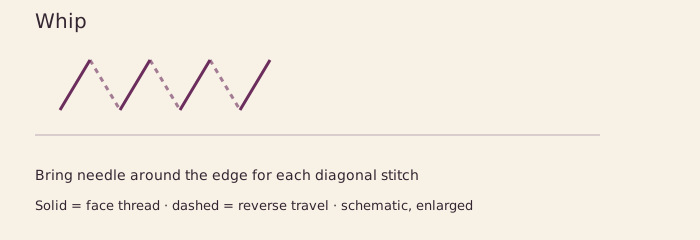
Follow the direction caption in the diagram. Practise on a spare square and keep the fabric flat.
Which sources did we use?
- DMC step-by-step embroidery stitch guidethread maker teaching reference · read 2026-11-04
- Coats seam construction typesthread maker teaching reference · read 2026-11-04
What if the practice seam goes wrong?
Stop and check the threading, needle and fabric combination before changing settings. Use the stitch fixer to match the symptom to a first check.
What should you practise next?
Try the scrunchie cutting chart and steps, or keep the beginner PDF pack for later.
Continue to the next lesson ↗